Here is the uncomfortable arithmetic of medical logistics. The transport is almost always a small fraction of what it carries — often a low single-digit percentage of the shipment's value. Yet that small fraction decides whether the other 98% is a working medicine or medical waste. Saving a little on the transport to risk the whole consignment is one of the worst trades in the supply chain.
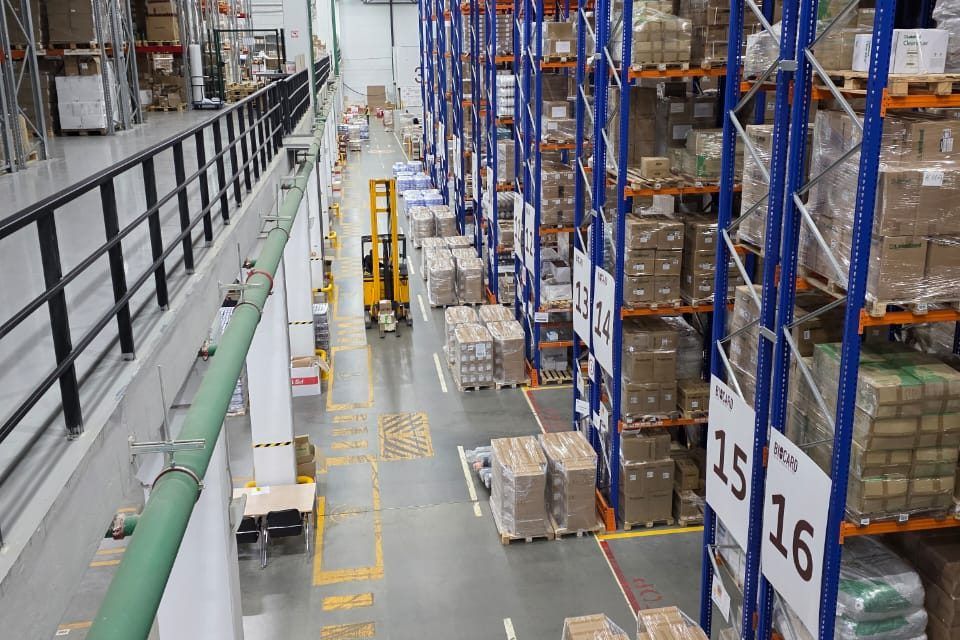
A modern medicine concentrates enormous value into a small, light package: years of research, manufacturing under pharmaceutical conditions, and quality release all sit inside a box that may weigh a few kilograms. Moving that box — even with specialist packaging, conditioning, monitoring and careful handling — is a modest cost next to the product itself. The temptation is to treat logistics as a line item to minimise. But you are not buying kilometres. You are buying the guarantee that the value already invested in the medicine survives the last, riskiest step of its journey.
It is never just the replacement value of the product. Add the quarantine and the investigation; the delayed treatment or postponed clinical activity; the missed laboratory deadline or the re-collected sample; the audit exposure; and the damage to a reputation that took years to build. The correct comparison is not “specialist courier versus ordinary courier.” It is “a controlled shipment versus the total cost of a failed one.” Seen that way, the specialist option is usually the cheaper one — it just moves the cost from after the failure to before it.
In a regulated supply chain, “it was fine” has no value; a record does. The temperature curve, the excursion check and the delivery documentation are what let a quality team release the product, answer an auditor, or investigate a problem with facts instead of guesses. That is why we treat the record as a deliverable, not an extra — and why our claims trace back to test data rather than adjectives. Transparent data is not paperwork; it is the evidence that the small transport cost did its job.
In a mild climate, an under-specified shipment might survive by luck. In a Gulf summer — +45 °C ambient, far hotter vehicles and tarmac, long dwell times — luck runs out fast, and the probability of a costly failure rises steeply. The hotter the environment, the more the small, certain cost of doing it properly outperforms the large, occasional cost of getting it wrong. This is the core of our approach on quality & compliance: propose the most practical level of protection for the value, sensitivity and purpose of the shipment.
Spend a little to protect a lot. In the cold chain, the cheapest shipment is the one that arrives intact — with the record to prove it.
The percentage figures here are illustrative of a general pattern in medical logistics, not a quotation or an audited statistic; the exact ratio varies widely by product and lane.
Tell us about the shipment. A BIOCARD specialist will review the route, temperature requirement and shipment details before responding.