If insulin shows why the cold chain matters, oncology shows why it is non-negotiable. Cancer biologics are the most sophisticated, most expensive and most temperature-sensitive medicines routinely shipped — and behind each one is a patient on a treatment schedule that cannot easily wait.
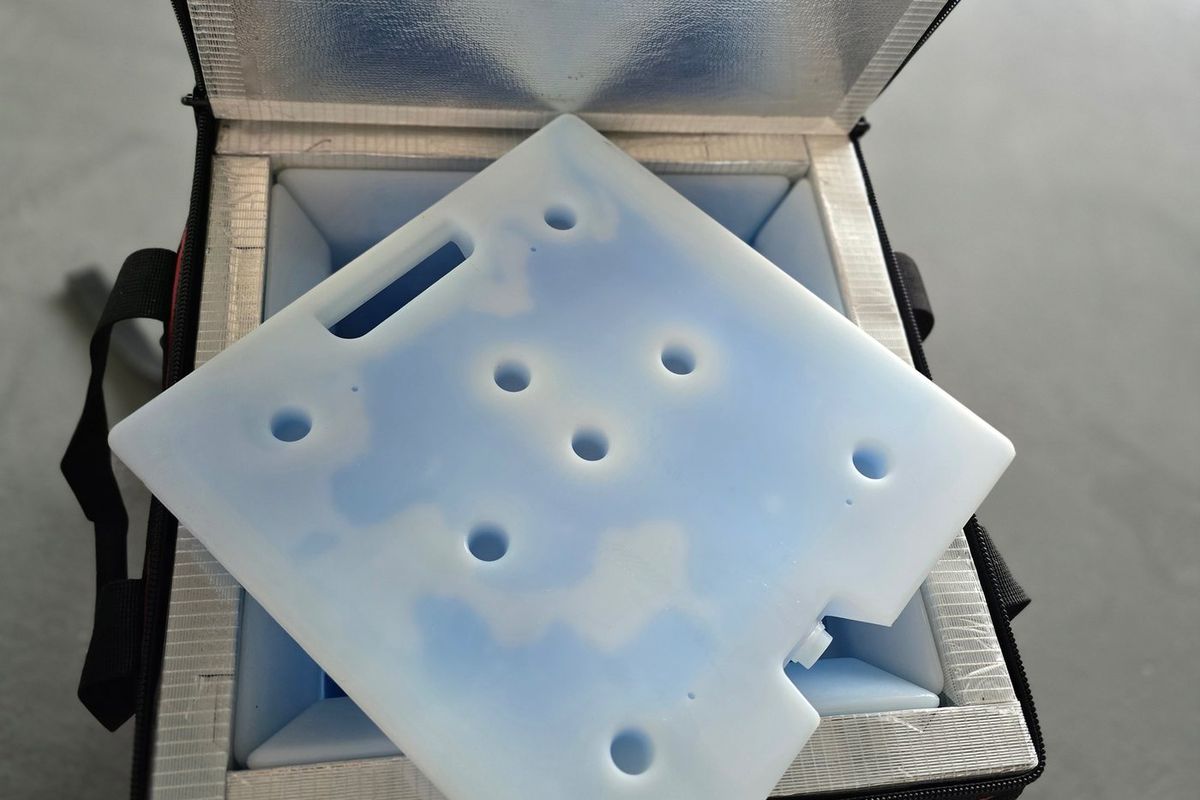
Most modern oncology therapies are biologics — monoclonal antibodies, checkpoint inhibitors and similar large-molecule drugs grown in living cells rather than mixed in a reactor. They are delicate in two ways at once. Like all proteins they denature with heat and freezing, losing the exact shape that lets them find their target. And many are sensitive to agitation as well — rough handling or vibration can cause proteins to aggregate, forming particles that make a dose unusable or unsafe. A cancer biologic therefore needs both a stable temperature and careful physical handling, from the moment it leaves storage to the moment it reaches the pharmacy or clinic.
Start with the vial: many oncology biologics cost thousands of dollars per dose, and a full course can run far higher. But the true cost is not the replacement value. It is a delayed infusion for a patient whose treatment is timed against their disease; a clinic slot lost; an investigation opened; and a gap in a therapy where continuity matters clinically. When you weigh that against the cost of transporting it correctly, the maths is stark — which is the subject of a separate article on cold-chain economics.
Most antibody-based oncology drugs are refrigerated products, stored and shipped at +2 to +8 °C and never frozen. Some advanced therapies — certain cell and gene treatments, and many research materials — require frozen or even ultra-low temperatures with dry ice. The point is that there is no single “cold”: each product has a specific range, and shipping it in the wrong regime is as damaging as no protection at all. This is why we select the configuration against the actual product rather than defaulting to one box for everything.
The most valuable medicine in the box is worth nothing if it arrives denatured. In oncology, the cold chain is part of the treatment.
Tell us about the shipment. A BIOCARD specialist will review the route, temperature requirement and shipment details before responding.