Why is temperature-controlled logistics a serious business in the Gulf, and not a niche? Because the numbers are large, the climate is extreme, and the products are valuable. Here is the landscape, in figures — drawn from published market estimates, not from our own books.
The GCC pharmaceutical market is estimated at around $20 billion, with Saudi Arabia accounting for roughly half of it. Zoom out and the global biopharmaceutical market is forecast to reach on the order of $1.17 trillion by 2030. A great deal of that value is temperature-sensitive — and a large and growing share of it flows through, or into, this region.
Because the environment fights you. Regional temperatures can exceed +50 °C, and the interiors of vehicles and loading areas run far hotter still. Against that, the products have narrow, non-negotiable windows:
| Regime | Range | Typical products |
|---|---|---|
| Controlled room temperature (CRT) | +15 to +25 °C | Tablets, many finished medicines, diagnostic kits |
| Refrigerated | +2 to +8 °C | Insulins, vaccines, biologics, many reagents |
| Frozen / cold chain | around −20 °C and below | Frozen samples and specified products |
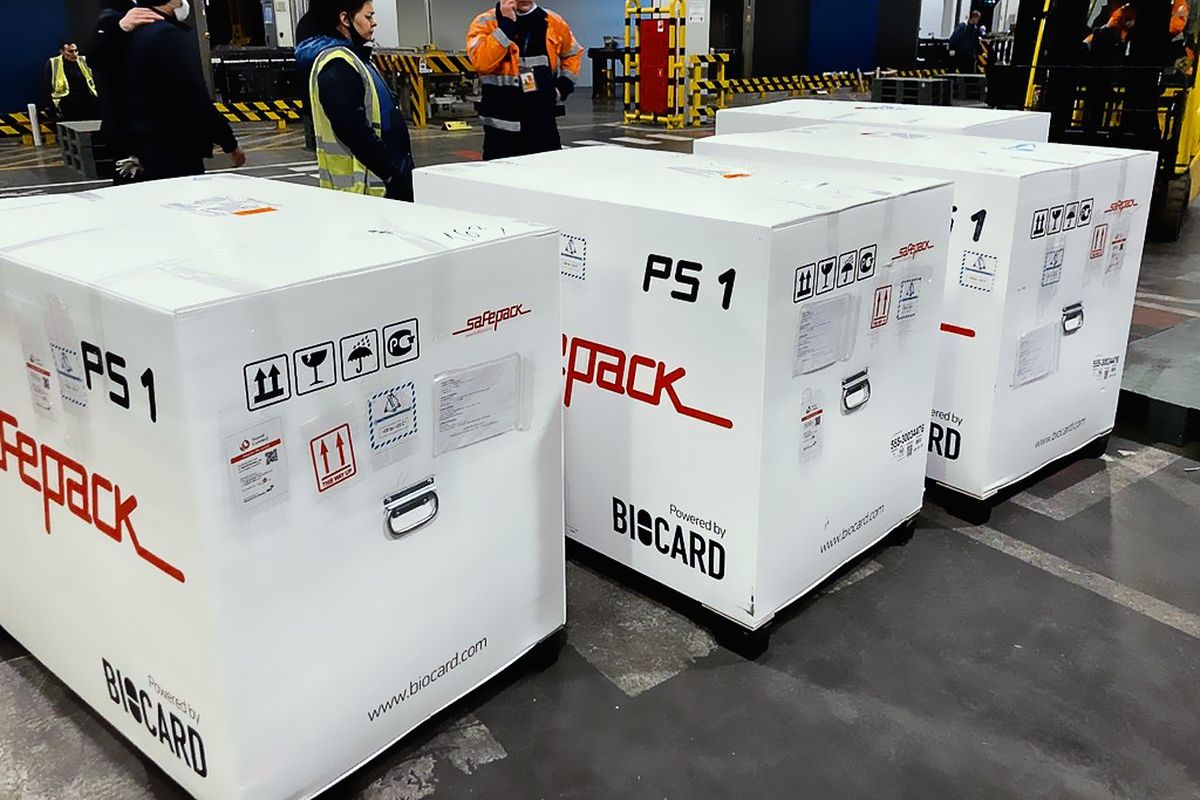
The gap between a +50 °C outside and a +2…+8 °C inside is the whole engineering problem — and it is why passive protection (thermal packaging, conditioned PCM, cooling elements) has to be selected deliberately rather than assumed.
The wider pharmaceutical cold chain is a substantial market in its own right — global cold chain logistics is estimated in the hundreds of billions of dollars and growing at double-digit rates as more medicines become biologic and temperature-sensitive. Even pharmaceutical packaging is a multi-billion-dollar market regionally — Saudi Arabia's pharma packaging alone has been valued in the billions. The takeaway is simple: keeping medicine cold is not a cost centre at the edge of healthcare; it is core infrastructure.
Three things. First, the value at stake per shipment is high, so the cost of getting temperature control wrong is high — the theme of our article on cold-chain economics. Second, the climate removes the margin for error that milder regions enjoy. Third, demand is growing, which means the discipline — packaging matched to the lane, monitoring, and records — only becomes more important. That is exactly the process we run on international and UAE lanes.
A large market, an extreme climate, and fragile products. In the Gulf, the cold chain is where healthcare logistics is won or lost.
Market figures are drawn from published industry and market-research estimates and are cited to convey scale; they vary by source, methodology and year, and are not BIOCARD measurements.
Tell us about the shipment. A BIOCARD specialist will review the route, temperature requirement and shipment details before responding.