Insulin and GLP-1 medicines must stay at +2…+8 °C from warehouse to patient-side pharmacy or clinic. In a Gulf summer — where a parked vehicle interior can pass +50 °C — that is an engineering problem, not a packaging afterthought. Here is how it is done properly.
Storage sites are qualified and monitored; vehicles and loading bays usually are not. Risk concentrates in the transitions: pack-out, the trolley across a hot yard, customs or reception delays, and the last hundred metres. Insulin does not show heat damage visibly — potency loss is silent — so the only way to know the product is still good is to control and record the conditions it travelled in.
Frozen gel packs have two failure modes here. Fresh from the freezer they can chill product below +2 °C — freezing insulin is as destructive as overheating it. And once their melt energy is spent, in +45 °C ambient they are spent quickly — often within hours. Phase-change materials (PCM) are engineered to hold a target band: conditioned correctly, they absorb heat at the temperature the product needs, protecting against both overheating and overcooling.
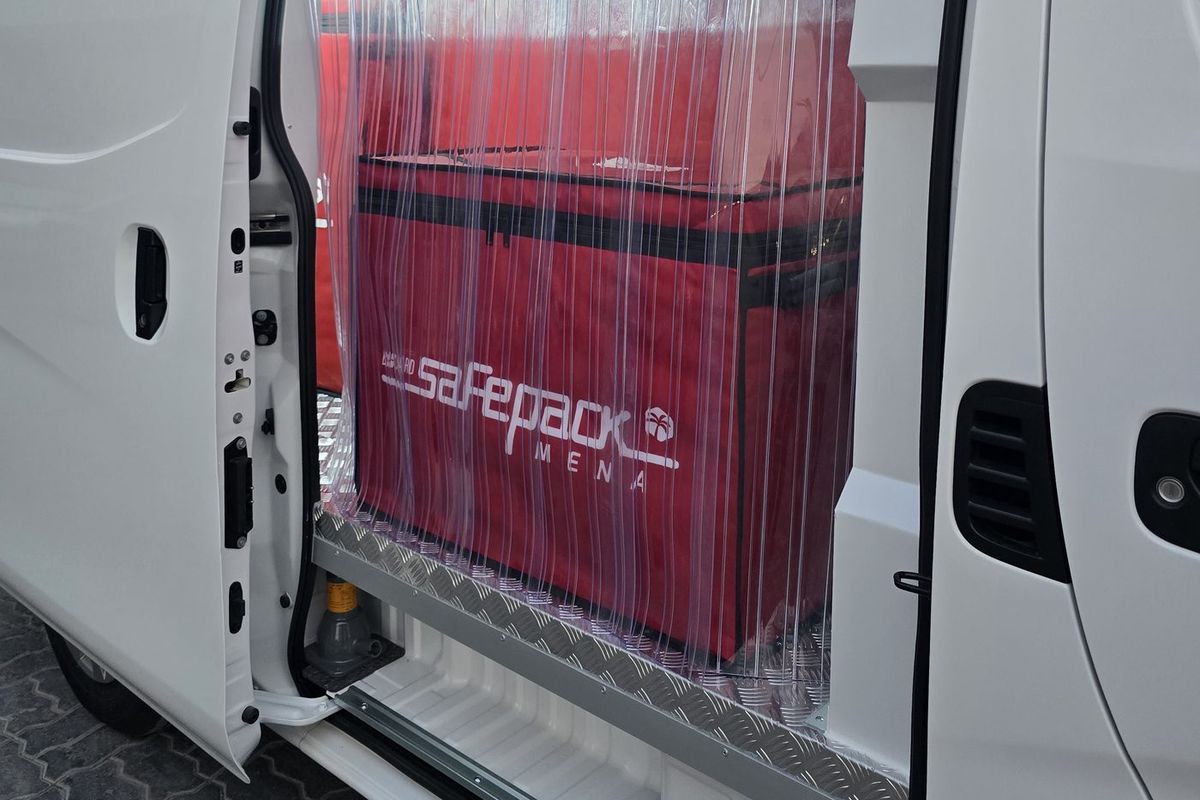
Our UAE delivery uses our own conditioned SafePack containers, our own sensors and our own drivers — direct, scheduled or multi-drop. Multi-drop insulin routes are sequenced to limit door-open exposure, and the record travels with the shipment. Selected SafePack configurations hold the range for up to 96 hours under defined conditions — confirmed per configuration, not assumed.
Tell us about the shipment. A BIOCARD specialist will review the route, temperature requirement and shipment details before responding.