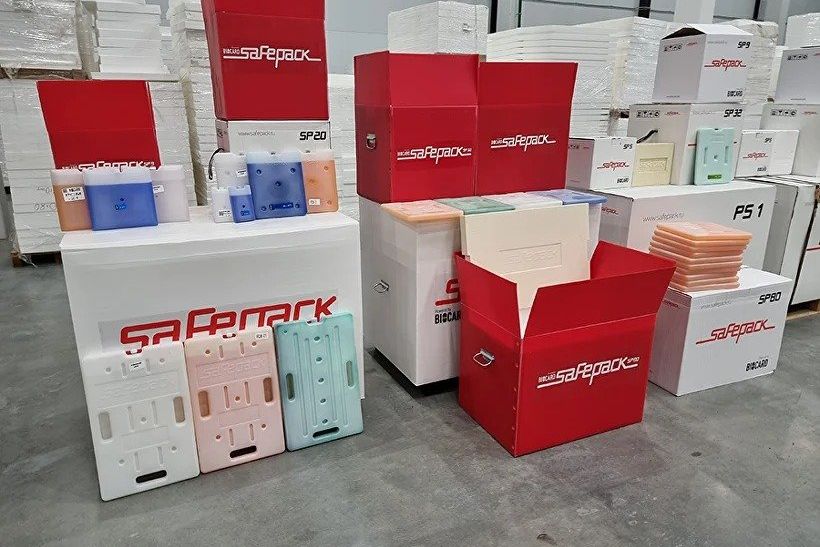
A single insulin pen and a pallet of vaccines do not belong in the same box. SafePack is a family, not a product — from a courier box built to ride on the back of a motorbike to a pallet-scale container for bulk air cargo. Here is how the range fits real shipments.
Usable volumes are given with the cold packs in place, from the BIOCARD price list of September 2026; dimensions are on the SafePack page. SP10 and PS-1 specifications, weights and the tested duration of your configuration are confirmed in your shipment plan.
The same container family is conditioned for different bands: refrigerated (about +2 to +8 °C), controlled ambient (about +15 to +25 °C) and frozen ranges. The regime is set by the PCM configuration, not by buying a different product — which is why selecting and conditioning the box correctly matters more than the box alone.
SafePack comes in both. Single-use models (built with corrugated cardboard and closed-cell insulation) suit one-way international lanes where returning a container is impractical. Reusable models (durable plastic, with locks and handles, easy to clean) are the economical and lower-waste choice for recurring domestic and regional routes. Both integrate the smart sensor; the right choice depends on your lane, not on a preference.
Match the box to the payload volume, the required range, the true door-to-door duration and whether the container comes back. If you tell us the product, the temperature and the route, we select the model and configuration and confirm the tested performance for it. That is the whole point of a SafePack shipment plan: the right box, conditioned correctly, with the evidence to prove it.
The best box is not the biggest or the most expensive. It is the one matched to your shipment.
Tell us about the shipment. A BIOCARD specialist will review the route, temperature requirement and shipment details before responding.