
Temperature-controlled logistics for clinical trials in the UAE and on international lanes: study kits, investigational product and eligible biological samples — packed in SafePack, monitored in transit and delivered with a temperature record for your trial master file.
Refrigerated, controlled-ambient and frozen study materials. Dry-ice lanes (−70 °C) are assessed and quoted per study.
SafePack hold time for selected configurations under defined conditions — confirmed for your configuration in the shipment plan.
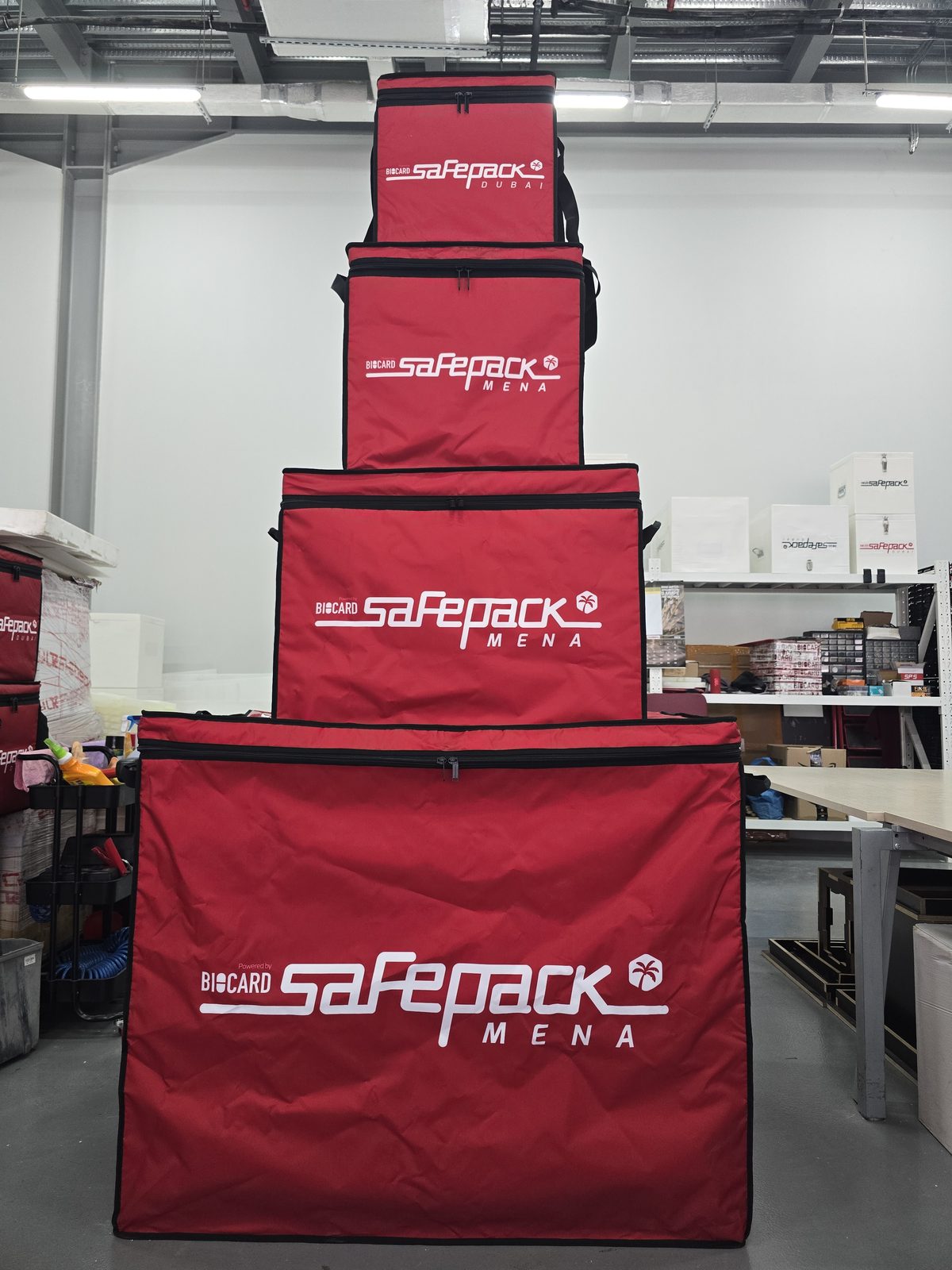
Usable volume of SafePack SP9, SP32 and SP80 with the cold packs inside — from a single kit to a multi-kit site delivery.
Operating range of the SafePack smart sensor, readable from up to 100 m without opening the box.
The BIOCARD Group has run clinical-trial logistics since 2007 — storage, distribution, returns and destruction of study materials, with projects for Novo Nordisk, Astellas and Lundbeck. In the UAE, each lane is assessed per study before we commit.
Service availability for infectious substances or regulated biological material is subject to correct classification, packaging, documentation, carrier acceptance and applicable UAE and international regulations.
Clinical shipments are judged by their paper trail. Per the agreed scope we provide temperature records, delivery confirmation and a shipment report suitable for the trial master file — and the control plan is written before the kit moves, so your monitor can see the process, not just the outcome.
Investigational medicinal product moves only with correct documentation and applicable approvals; regulated items are confirmed per shipment.
Kit distribution: one regime, documented handovers.
For a first assessment, describe the shipment rather than sending a full study protocol. The six points below help your team prepare a request for a route plan and quotation. Keep any detailed lane worksheet ready for the follow-up discussion.
Company, your role in the study and a business contact. Say whether you need an initial feasibility review, a quotation or a recurring shipment plan.
Study kits, investigational product, comparator or eligible samples; origin, destination and site or laboratory roles. Separate outbound, collection and return legs, and state the expected frequency.
Use the temperature requirement supplied by the study or product owner and note any handling restrictions. If it is not confirmed, say so rather than choosing a range to obtain a quote.
Package count, packed dimensions and gross weight; when the shipment is ready and the receiving window. Distinguish a typical movement from peak demand.
Required temperature and delivery records, the role reviewing them, and any packaging retrieval or goods return. Identify items needing a separate assessment.
Ask which transport legs, packing, monitoring and records the proposal includes. Flag customs or importer-of-record needs, regulated material and ultra-low temperatures for individual review.
Use business and shipment details only. Do not include patient names, participant identifiers, medical records or confidential study documents. Acceptance of regulated materials and any additional services remains subject to the assessment described above.
Start with the shipment plan form below: put a short material, route and frequency summary in “What do you need to ship?”, then open “Add shipment details (optional)” for your company, package sizes, dates, temperature and monitoring requirement. The form has no attachment field; keep the detailed worksheet for follow-up.
Tell us about the shipment. A BIOCARD specialist will review the route, temperature requirement and shipment details before responding.